
Last updated November 22, 2026
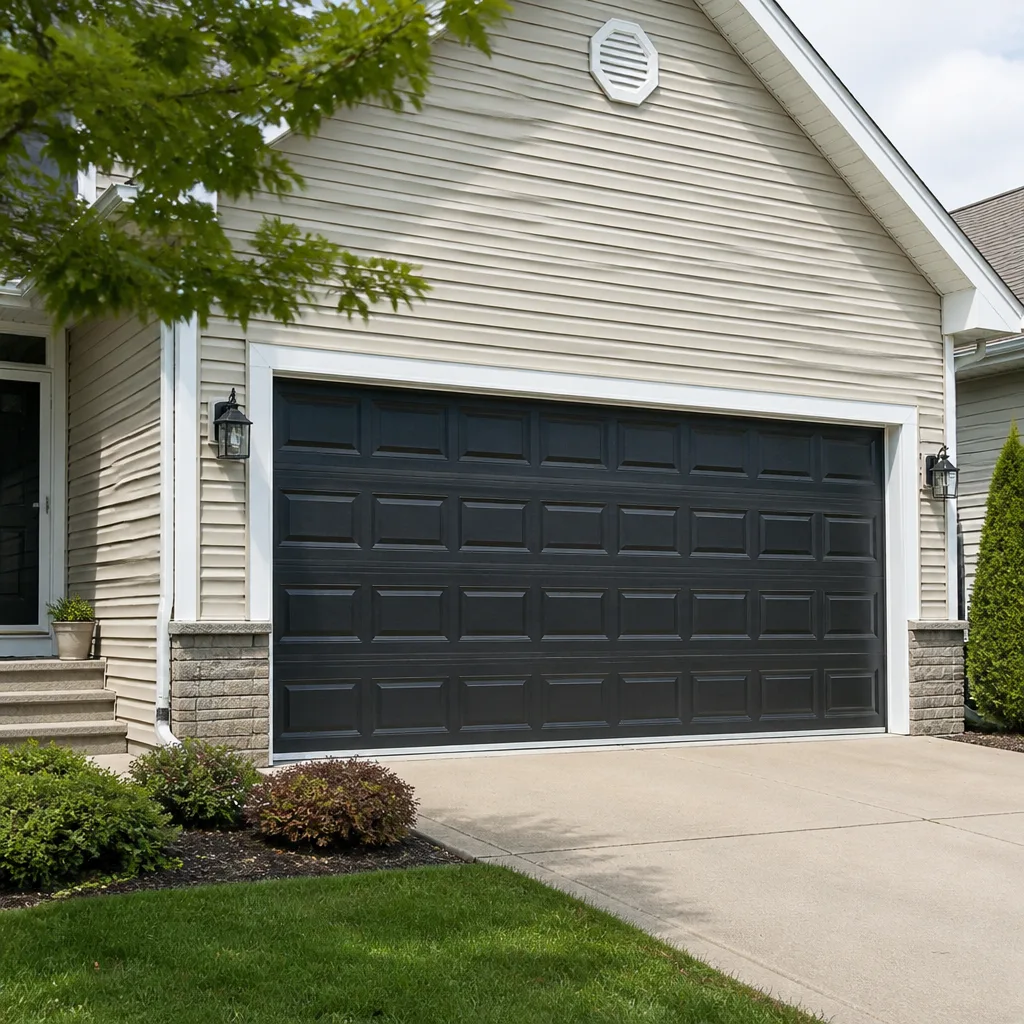 Raised-panel steel
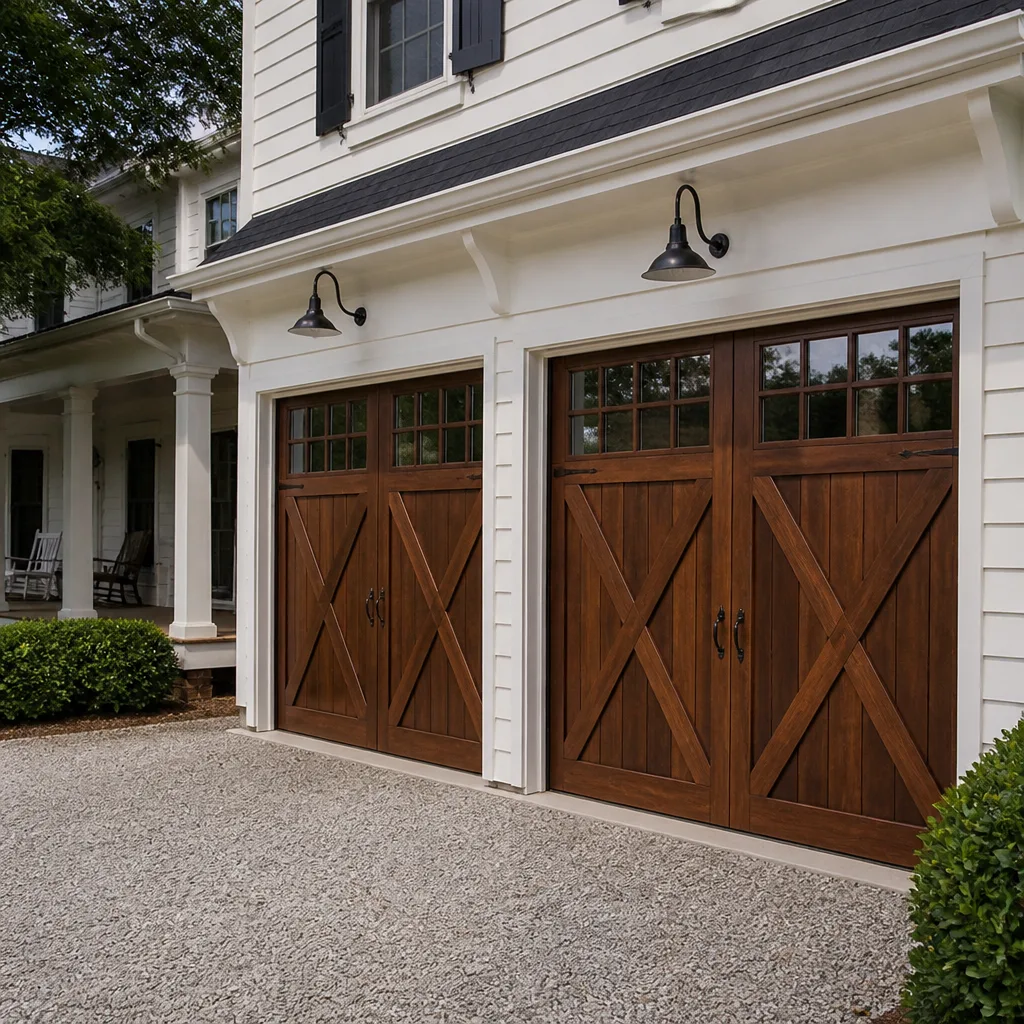 Carriage house
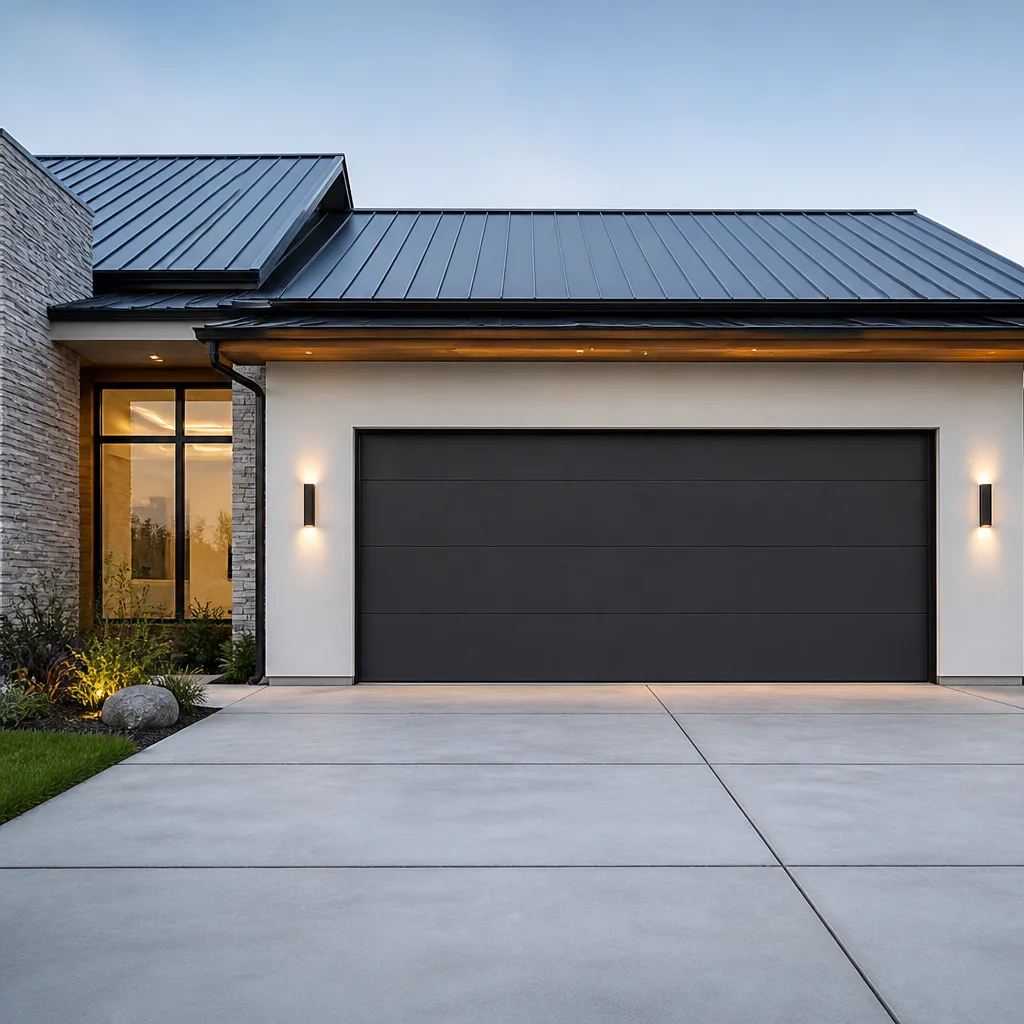 Modern flush
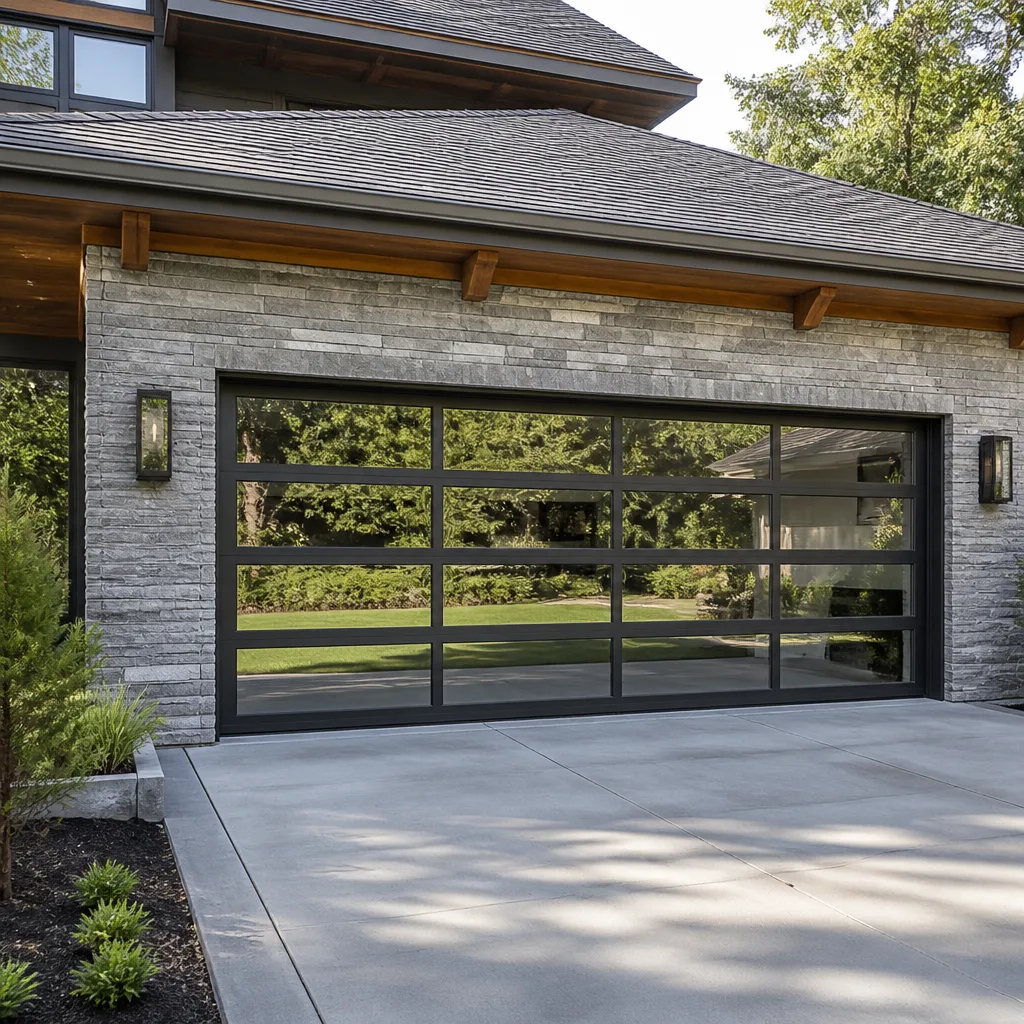 Full-view glass
 LiftMaster openers
 Chamberlain openers
Full 25-point door and opener safety check with every visit - springs, cables, rollers, tracks, and your LiftMaster or Chamberlain opener included
You get a price before we start. It does not change when the pro arrives.
Get your free estimateGarage Door Warning Signs: A Lynnhaven Homeowner’s Reference Guide
A garage door that reverses before closing all the way has at least six different possible causes, ranging from a sensor knocked out of alignment to a failing motor that needs replacement. The symptom alone tells you almost nothing. The pattern around it tells you everything.
Most warning-sign guides hand you a list of noises and quirks and leave it there. That helps you notice something is wrong, but it doesn’t help you judge how wrong, or how soon to pick up the phone. This reference does the harder part. It connects each symptom to the mechanical chain reaction behind it and assigns an honest response timeline: call today, call this week, or log it and check again in a month. You’ll also learn how to describe a problem so a technician can read it accurately over the phone, which warning signs homeowners in Lynnhaven tend to ignore for months, and what that delay actually costs.
Quick Answer
The warning signs that matter most on a garage door are these: a door that reverses on its own, a snapped or visibly stretched spring, a door that hangs crooked, a cable that’s frayed or off its drum, and an opener that runs but doesn’t lift the door. Any of these can point to a component under heavy tension. The ones that signal immediate danger (a broken torsion spring, a dangling cable, a door off its tracks) should get a call today. Rumbling, minor vibration, a slow-close, or a sensor that occasionally blinks usually means a scheduled repair this week.
Styles & brands we work with
- Raised-panel steel
- Carriage house
- Modern flush
- Full-view glass
- LiftMaster openers
- Chamberlain openers
Table of Contents
- The Symptom-to-Cause Matrix
- Which Warnings Mean Call Today, This Week, or Check in 30 Days
- Spring Warning Signs and Why They’re the Loudest Alarm of All
- Cable and Rust Warnings
- Opener Warning Signs
- Track, Roller, and Panel Warnings
- How to Describe the Problem Accurately on the Phone
- The Warnings Homeowners Ignore and What They Cost Later
The Symptom-to-Cause Matrix
Here’s the core idea behind this whole guide. Every symptom on a garage door has two or three likely mechanical causes, not one. When you call a technician, the detail that separates one cause from another is usually something you can observe in a minute if you know what to look for. That observation is the difference between a quick fix and a mystery diagnosis.
The matrix below covers the symptoms we see most often in Lynnhaven. For each one, the causes are listed roughly in order of likelihood, along with how to tell them apart by looking.
- Door reverses before touching the floor. Likely causes: safety sensor misalignment (look for a blinking indicator LED on the sensor housing), a sensor lens fogged or blocked by a cobweb, or the down-limit travel set too high on the opener. Distinguish by watching the sensor light first. If it’s solid, the sensor isn’t the problem and the travel setting is the next suspect.
- Door is slow to open or starts to open and stops. Likely causes: a binding track, a worn roller dragging in the track channel, or a weak opener motor struggling with the load. Distinguish by pulling the disconnect cord and lifting the door by hand. If it moves freely, the door is fine and the opener is the problem. If it fights you, the door’s hardware is binding.
- Loud bang from the garage, door won’t lift. Almost always a torsion spring failure. The evidence is a visible gap in the spring coil above the door, or the door sitting uneven and heavy when you try to lift it by hand. Treat this one as an immediate call.
- Door hangs crooked or looks lopsided when opening. Likely causes: one broken spring on a two-spring system, a snapped lift cable, or a broken roller or hinge on one side. Distinguish by checking the springs first. If both are intact, look for a cable that’s come off its drum or is hanging slack.
- Opener runs but door doesn’t move. Likely causes: a stripped opener gear, a broken disconnect, or a door that’s stuck and the opener’s force limit has cut the motor. Distinguish by disengaging the door. If it moves freely and the opener still hums without movement, the gear is the suspect.
One good habit before you call: walk around the garage and look at the whole door, not just the part that’s making noise. In our experience, the part that fails is often downstream of the symptom. A door that reverses might have a perfectly healthy sensor, but a sagging track that’s throwing the door off as it closes. For a full repair scope, our Garage Door Repair Lynnhaven page covers what we handle.
Which Warnings Mean Call Today, This Week, or Check in 30 Days
Not every warning sign is an emergency, and the second-worst thing you can do is panic over a roller that needs grease. The three tiers below are the honest sorting that most guides skip. Use them to decide how fast to act.
Call today
- Spring snapped, or a visibly stretched spring with a gap in the coil.
- Cable frayed, snapped, or hanging loose from its drum.
- Door off its tracks, or rollers popping out of the track.
- Door sitting unbalanced, one side sagging when lifted by hand.
- Anything that happened with a loud bang, or a sudden jolt.
These involve components under extreme tension or a door that can fall. Keep people and vehicles clear until a professional has looked at it.
Call this week
- Opener runs but the door moves fitfully or stops mid-travel.
- A persistent grinding, squealing, or scraping sound during operation.
- Sensor intermittent: door reverses on a cloudy day or when the sun shifts.
- Door starting to bind or shudder slightly in one section of travel.
- Rollers visibly worn, cracked, or flat instead of round.
None of these is a same-hour hazard. They’re a scheduled repair, best handled before the component fails outright.
Monitor and log
- Minor vibration on one side of the door.
- A single loud operation from stiff rollers or dry hinges.
- Opener chain noticeably looser than usual but not sagging.
- Panel paint starting to fade or chalk on the south-facing side.
Nothing needs a technician yet. Mark a date 30 days out and check whether the symptom has worsened. If so, move it to “call this week.” If not, log it and check again. Keeping a short note on the garage wall is enough; you’ll be surprised what a written comparison tells you that memory doesn’t.
Spring Warning Signs and Why They’re the Loudest Alarm of All
A torsion spring or extension spring is the component that lifts your door, and it’s under enough stored energy to seriously injure someone who doesn’t know exactly how to work around it. That single fact drives one rule: spring repairs are the one garage door job that should never be a DIY project. Every spring warning sign on the door should be treated as a “call today.”
What to look for:
- A gap in the coil. On a torsion spring, a snapped spring leaves a visible split in the tightly wound coil above the door. On an extension spring, look for a coil stretched out flat, or a spring that’s untwisted and dangling.
- The door feels impossibly heavy. With the opener disconnected, a working spring system should let you lift the door with one hand. If it takes two hands and real effort, one or more springs are failing.
- A door that opens a foot and stops. This is often a spring that’s lost its tension, not an opener problem. The opener can’t lift weight it was never designed to lift alone.
- Uneven travel. One side lifts faster than the other, or the door twists as it rises. Usually one spring on a two-spring system, or one failed extension spring on a side pair.
- A garage door that bangs once and goes quiet. That single loud bang is often how a torsion spring announces itself. Don’t keep cycling the opener to test it.
The reason springs dominate the warning-sign conversation has less to do with how common they are and more to do with how little margin there is when they’re ignored. A stretched spring isn’t just weaker. It changes how the cables carry the door, so the strain shifts onto parts not designed for it. That’s also why spring pricing is quoted per spring and not per door. On a matched pair, both springs are usually replaced together, because a new spring pushing against a tired one just moves the failure to the older part.
Our technicians have up to 11 years of experience, and spring repair is a dedicated specialty for us rather than a side task. If you’d like to know what to expect on a repair visit, our garage door repair page walks through the process.
Cable and Rust Warnings
Cables look simple and aren’t. Each lift cable is a bundle of woven strands that runs along the door’s side and wraps around a drum. When a strand breaks, the rest take the load. The door still works. That’s what makes cable warning signs so easy to miss.
Watch for these patterns:
- Fraying or a single broken strand. Run a gloved hand along the cable (without putting weight on it) and look for whiskers poking out of the braid. One broken strand means a replacement is due.
- Rust bloom on the cable itself. Brown staining on the braid is surface rust, and it usually means water has been reaching the cable regularly. When it’s present at the drum as well, the corrosion has likely reached the winding layer.
- Surface rust on hinges, rollers, and track. Rust on these parts is one of the earliest indicators to look at. It’s not dangerous by itself, but the same moisture that caused it is working through the cable and drum at the same time.
- A cable that’s off its drum, hanging slack, or clearly at the wrong angle. This one is a call-today, because the loose cable can catch and snap under the spring’s tension.
We live and work in an area where muggy summers and humid stretches are part of the season, and a garage is often the most humid room on the property. If your garage has a dehumidifier running or a bare concrete floor that beads with moisture in July, cables and hinges will show rust at the low points where water collects. Check the lowest hinge and the bottom roller of each side first. In our experience, rust shows up there weeks before it shows at the top of the door.
Frayed or corroded cables and springs are the pair that should never be handled without proper training and the right tools. The stored tension on a wound cable is genuinely dangerous, and a slipped cable under tension can crack like a whip. Call a specialist. For emergency cable and spring calls we answer 24/7, and we offer fast dispatch from 7am to 7pm, Sunday through Friday.
Opener Warning Signs
The opener is the most misdiagnosed component on the whole door. When a door doesn’t open, homeowners reach for the opener first. Often the opener is fine and the door is fighting it. The warning signs below are the ones that actually point to the opener itself.
- Opener hums but the door doesn’t move. A hum with no travel usually means the motor is running but the drive (gear, chain, or belt) is disconnected. If the door moves freely by hand with the disconnect pulled, the opener is the problem.
- Chain or belt sagging. A chain that flaps or sags noticeably under the rail is a tensioning issue. Left alone, the chain can slip the sprocket.
- Radio range has dropped. Remotes that only work when you’re a few feet from the door usually mean the safety-eye wiring or the opener’s antenna is compromised, not a dead remote. Swap remotes and watch whether the range returns. If not, it’s the opener side.
- Opener stops partway and reverses. Often the force limit is set too tight and the opener is interpreting door resistance as an obstruction. The question is why the resistance appeared. That’s a door symptom, not a motor symptom.
- Lights flash, door won’t respond. On units from LiftMaster, Chamberlain, Genie, and Craftsman, a flashing safety indicator usually means the sensor circuit is open. That’s a sensor alignment issue first, an opener issue second.
- Door opens by itself. Stray signals, a stuck wall button, a mis-wired remote pad, or a logic board failing. Start by pulling the battery from every remote in the house to narrow it down.
Before you replace an opener, check the age of the door’s mechanical hardware. A 15-year-old spring and worn rollers will put drag on a brand-new opener just as they did on the old one, and the failure repeats. Matching the opener to the door, not the reverse, is what makes the repair stick. We repair and replace openers across the major drive systems, and our garage door opener repair page covers what’s involved. If you’ve decided the opener is beyond repair and you’re weighing a new system, our garage door installation page explains the replace-versus-repair question.
Track, Roller, and Panel Warnings
Tracks and rollers carry the door’s weight along its path. Panels take the impact and the weather. These are the quiet parts of the system: they rarely fail suddenly, but they telegraph a slow decline for months before they do.
Track and roller warning signs
- Rollers chattering or scraping in the track. Usually a dirty track or a roller that’s wearing flat. Rollers should turn smoothly; a wheel that stops turning is dragging.
- Door shudders or hesitates at one point of travel. Usually a slightly bent track or a hinge that’s loosened. Look for a kink or a dip in the vertical track on that side.
- A visible bend in the track. If the door clears it, you may only be losing quiet. If the door’s rollers jump the track, it’s a call-today. Don’t cycle the opener to try to force it back.
- Door hangs uneven at the top or bottom. A twisted track or unequal spring tension. Rule out the springs first; if they’re intact, the track’s alignment is the suspect.
- Door scraping the floor or the header on one side. A worn bottom roller or a track that’s drifted out of true. Small adjustments compound into a door that hangs on the framing.
Panel warning signs
- Dings and dents on the lower tier. Once a panel’s skin is dented deep enough to crack the paint, moisture gets between the skin and the foam core and starts a slow corrosion from the inside. A small dent is cosmetic. A cracked paint line is a corrosion seed.
- A panel that’s come out of the hinge on one edge. The door will still work, but that panel carries no load, and the whole door flexes at that point.
- Rust bubbling from under the bottom panel paint. This is the classic point where the bottom seal fails, water collects, and the panel skin starts to pit from behind the paint. Once it penetrates, repair means replacement of that section.
- Fading or chalking on the south- and west-facing side. Our UV over a long summer is hard on paint. If a panel is chalky to the touch and the color has shifted, the paint is failing. Cosmetic, but worth logging.
Panels from brands like Clopay, Amarr, Wayne Dalton, and Raynor are sold through professional channels, so replacing a single matching panel takes a model lookup rather than a guess. If the rest of the door is sound, that’s often the faster route than a full replacement. If the panels are failing from the bottom up, a whole door is usually the better value. Either way, a specialist should walk you through the trade-off in person.
How to Describe the Problem Accurately on the Phone
A good phone description saves a visit. A vague one, like “the door won’t work,” wastes a diagnostic trip and puts the wrong parts in the conversation. There are five details that change the diagnosis the most. Have them ready before you call.
- What you saw and heard, in order. “It opened halfway, made a bang, and stopped” is a different problem from “it stopped, I pushed the button again, and then it banged.” The sequence often names the failing part.
- Whether the opener runs. Can you hear the motor? Does the light flash? Does the chain or belt move without the door? That single answer splits door problems from opener problems roughly in half.
- What the door does when you pull the disconnect. If your opener has a release cord, pull it (only when the door is down) and try to lift the door by hand. Heavy or stuck points to the door. Light and free points to the opener.
- Which side and which height. “The left side sags near the top” is more useful than “it looks crooked.” Note the height where the door hangs or stops, and whether it’s one side or both.
- What you can see on the springs and cables. A visible gap in a spring coil, a frayed cable, or rust bloom at the drum. This single look tells the technician whether to bring a spring kit or just a sensor on the first visit.
Add the brand and model if you can see it on the opener housing. We’re familiar with LiftMaster, Chamberlain, Genie, Clopay, Amarr, Wayne Dalton, Craftsman, and Raynor systems, and the model tells us what tools and parts to expect before we pull in. If you don’t know the brand, describe the color of the housing and whether the rail is a chain, belt, or screw drive. Our technicians have up to 11 years of experience translating that into a plan.
The Warnings Homeowners Ignore and What They Cost Later
The four signs below are the ones that linger for months in a Lynnhaven garage. None of them looks serious on the day you notice it. Each of them causes a real chain reaction when the door is cycled daily.
- Rust at the bottom hinge and roller. Ignored, the rust spreads to the cable at the drum and eventually to the spring anchors. What a hinge and roller replacement would have stopped becomes a cable and spring job. The panel stays intact, but the repair scope grows.
- A door that shudders at one point in travel. Usually a hint of a bent track or a worn roller. Left alone, the roller can pop out of the track and the door drops or jams, which increases the chance of panel damage. A roller and track adjustment becomes a panel and track replacement.
- An opener that stops and reverses intermittently. Often a force-limit setting covering for a growing door drag. Keep resetting it and the opener’s gear wears faster. What could have been a door adjustment becomes a door adjustment plus an opener rebuild or replacement.
- A single panel ding with a cracked paint line. Water gets behind the paint, the panel pits through its skin, and that section needs a full replacement. On a matching-panel lookup, waiting months can also mean the panel becomes unavailable from the manufacturer, which turns a single-panel fix into a full door.
None of these is a same-day emergency. The point is the opposite: they’re cheap to stop early and expensive to fix late. A spring and cable problem handled after they fail usually involves damage to a roller, a track, or a panel that wouldn’t have been touched if the corrosion was caught at the start. The compounding pattern is always the same. The quietly rusting part loads the next part. The next part wears out. Then the third part takes the impact.
For anyone who wants to know how the fix works in practice, our team’s guide to garage door repair in the area is a useful starting point before you call. Keep your log simple: date, what you noticed, which side. Six months of notes is more useful than any single inspection.
Common Mistakes to Avoid
- Cycling the opener repeatedly to “test” a failed spring or a jammed door. Each cycle pushes a stressed component further. Once you hear the bang or see the gap, put the opener down and call.
- Assuming a reversing door is always a sensor issue. If you’ve already wiped the sensor lenses and confirmed the indicator light is solid, the sensor isn’t the problem. Keep looking at the track, the down limit, and the door’s balance before you buy a new sensor.
- Greasing a track to quiet a shudder. Track lubrication attracts grit and can make rollers bind. Rollers get the lubricant. The track wants to be clean, dry, and lubricant-free.
- Ignoring rust because “it’s just a garage.” Rust at the bottom hinge and the cable at the drum is the earliest evidence that a bigger repair is already in progress. It’s worth a phone call.
- Replacing a single spring on a matched pair. The new spring presses against the worn one, and the failure moves to the older half within a short window. Replacing springs in pairs is the standard. Ask whether your door has one spring or two before you accept a quote.
- Putting a new opener on an old door. A tired spring, worn rollers, and a slightly bent track add drag that a new motor wasn’t rated for. It fails in months. Fix the door’s mechanical problems first, then the motor.
- Waiting until the door won’t close at all. A stuck-open door is a security problem for the whole property. When the garage door stops working, your day stops with it, and the fix is a phone call to a specialist, not a weekend scramble with a ladder.
See the difference
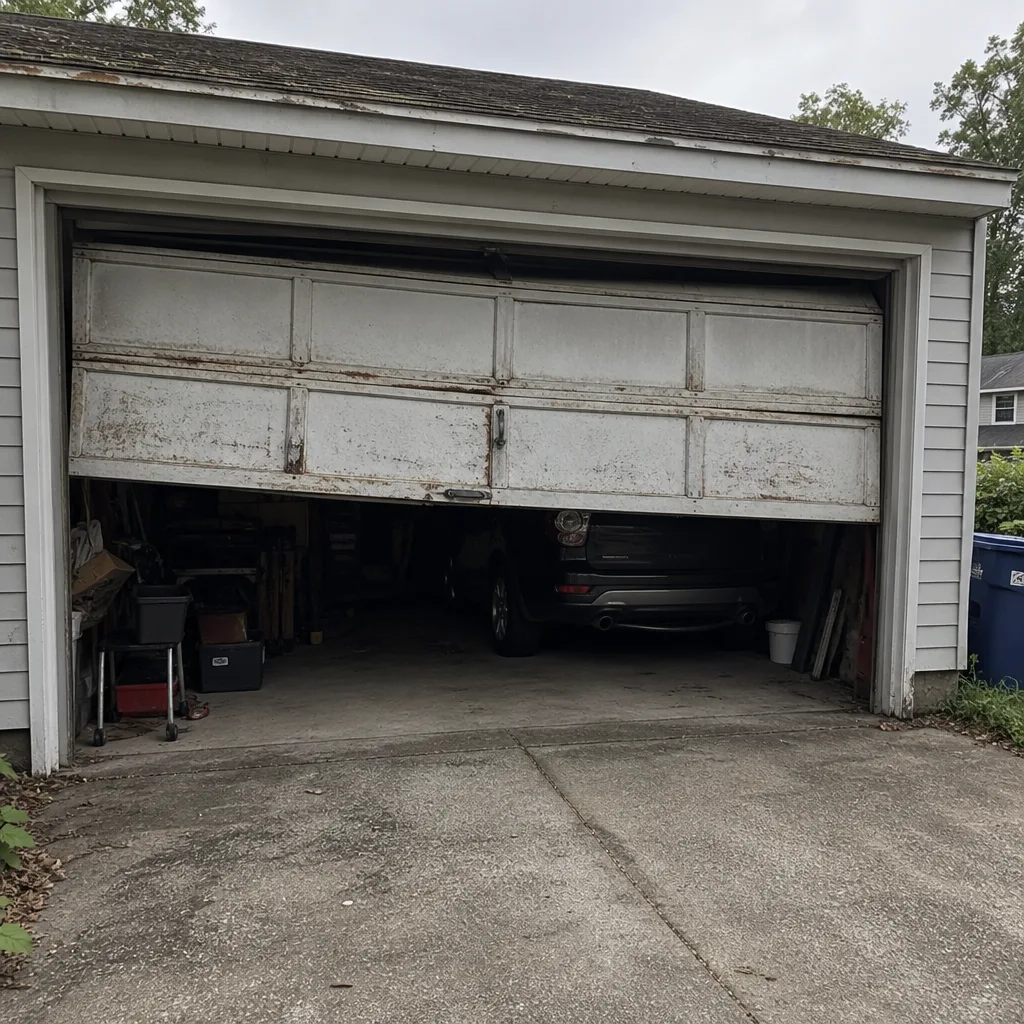 Before
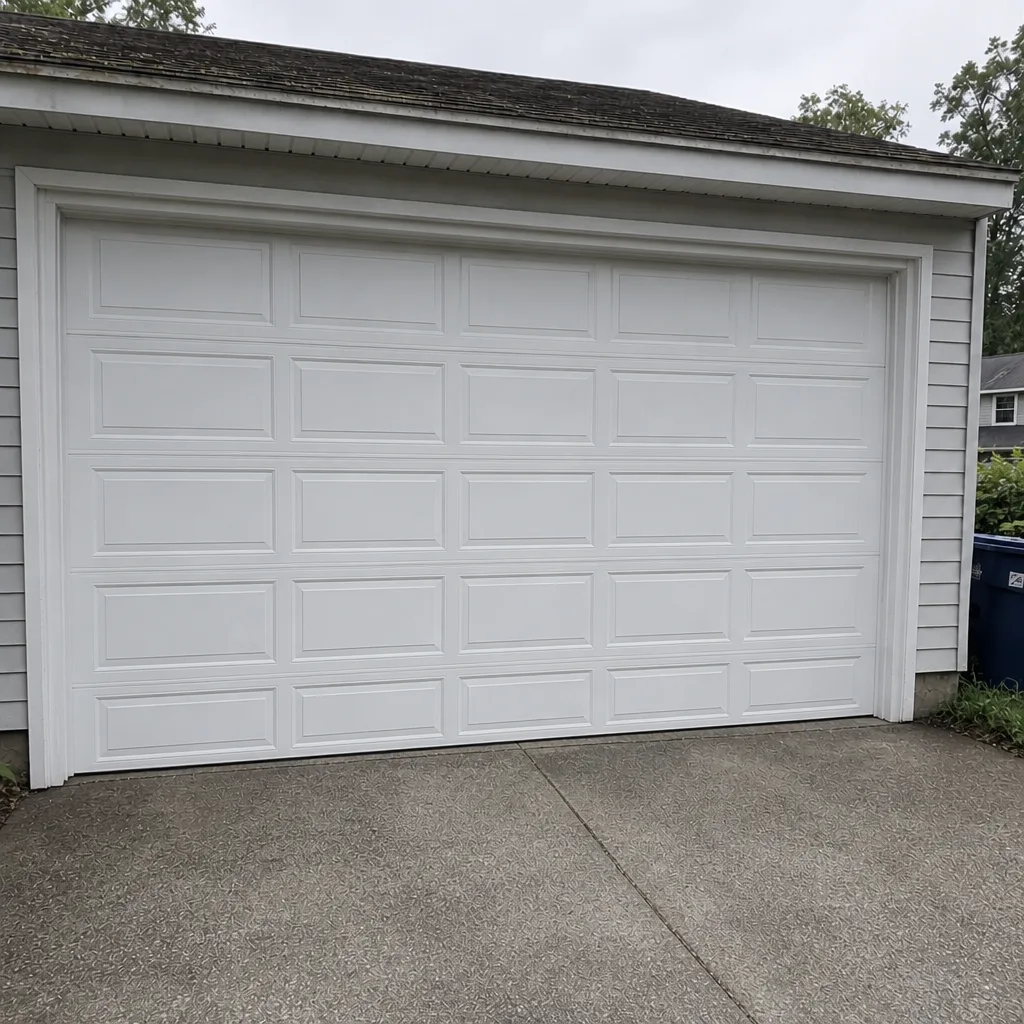 After
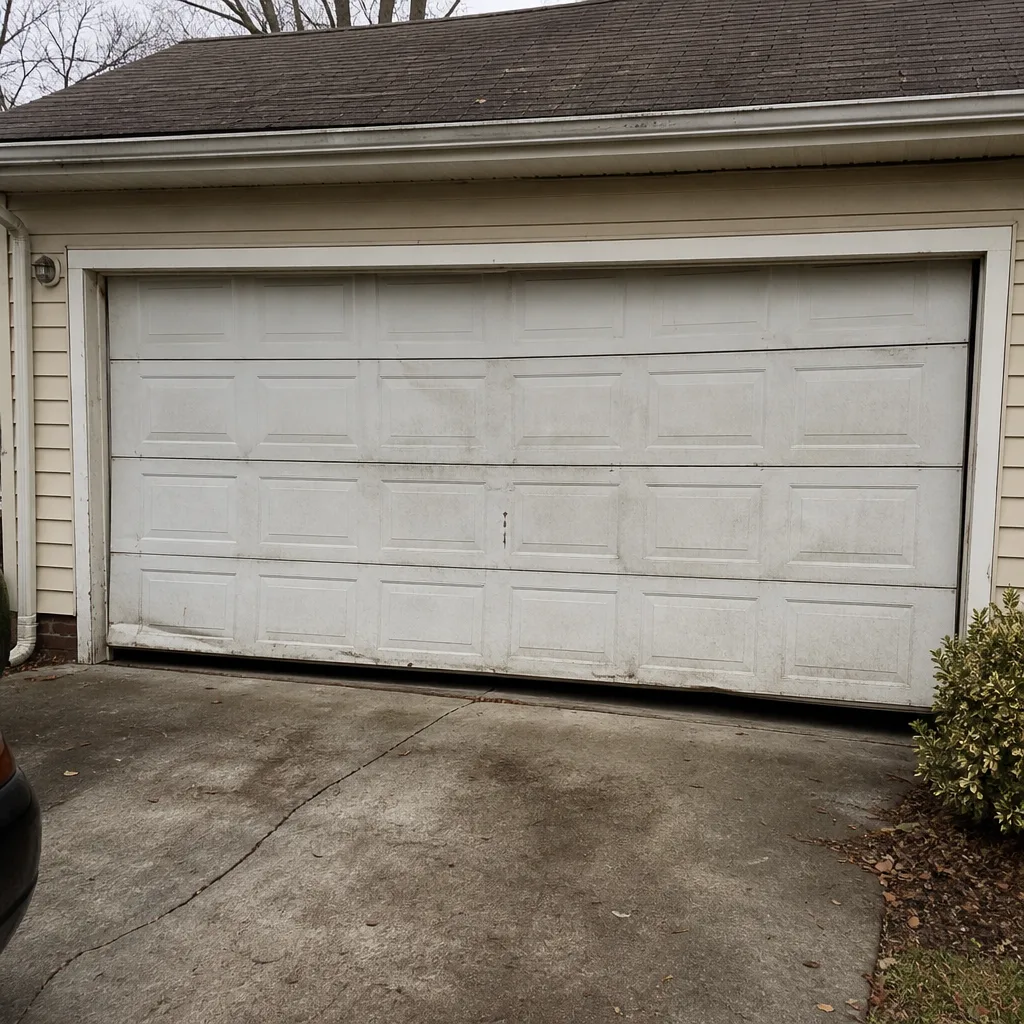 Before
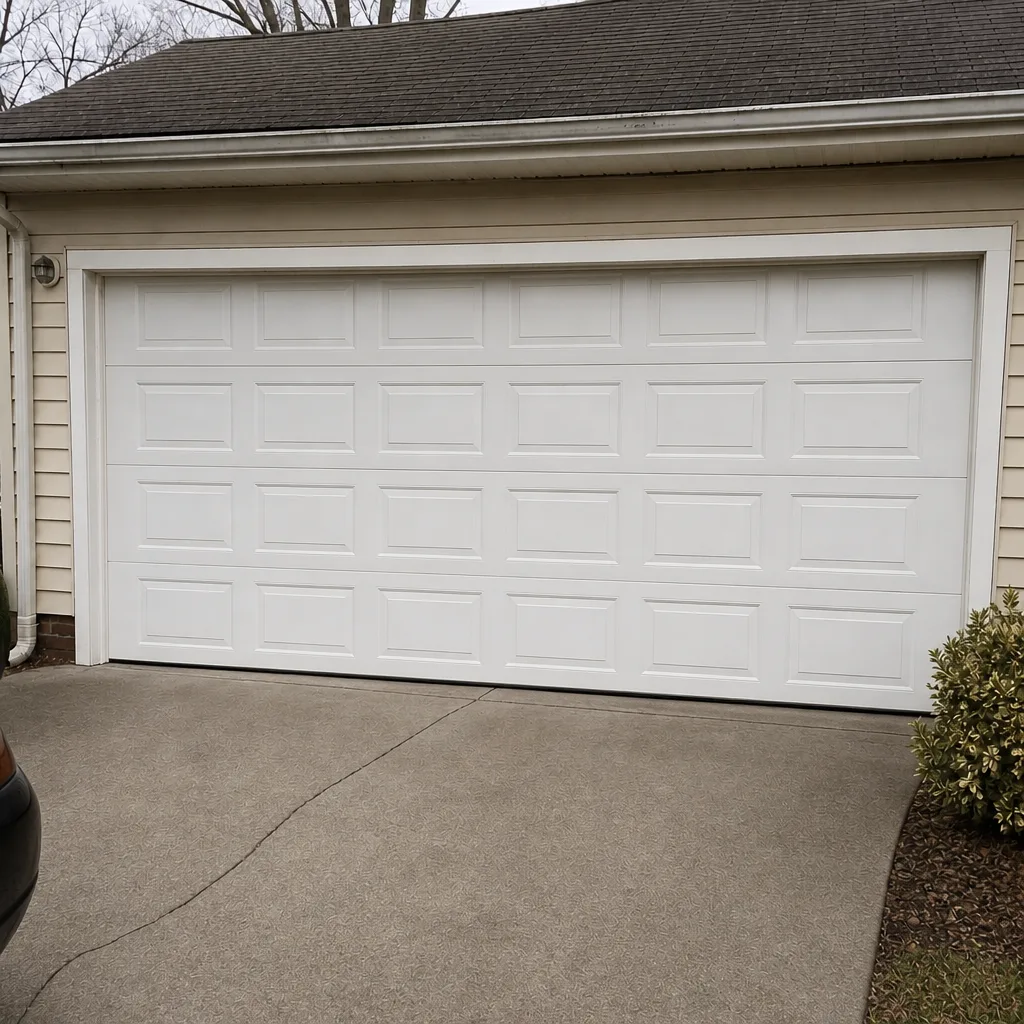 After
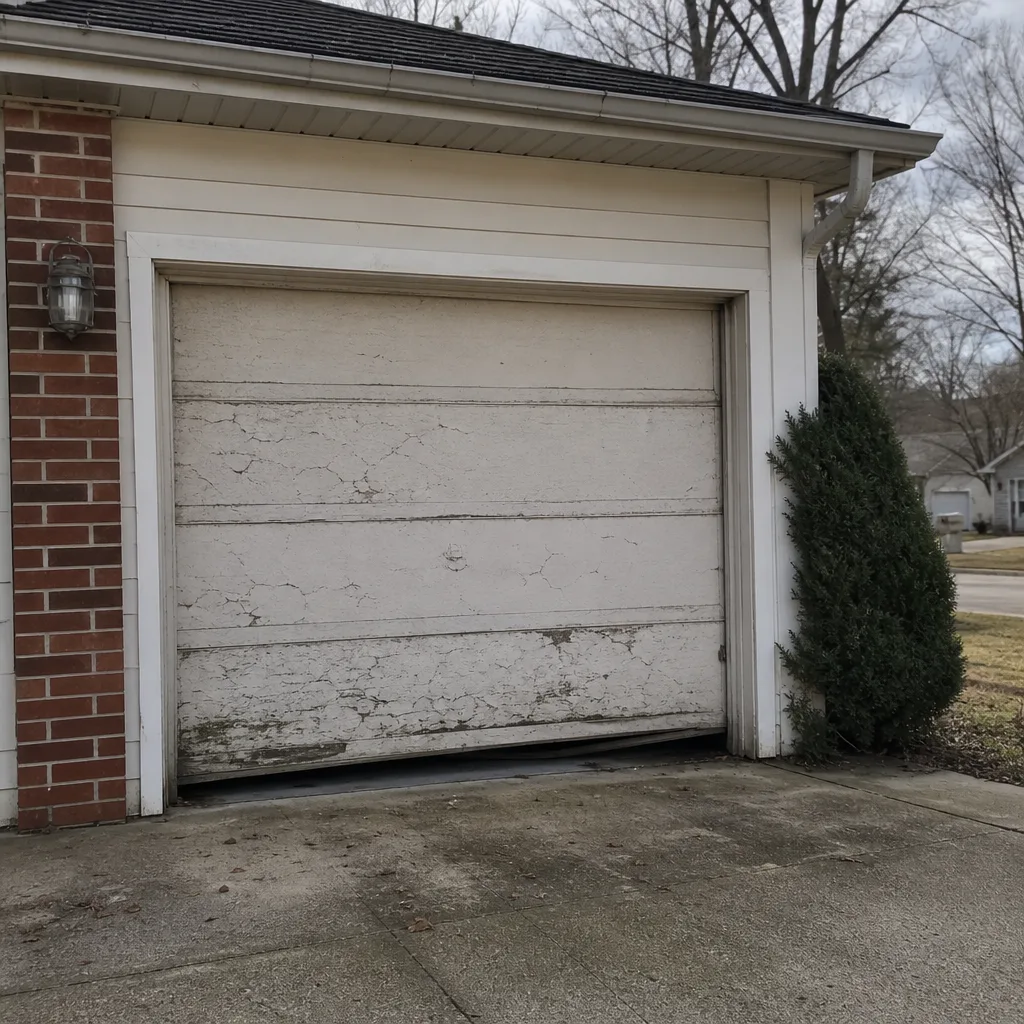 Before
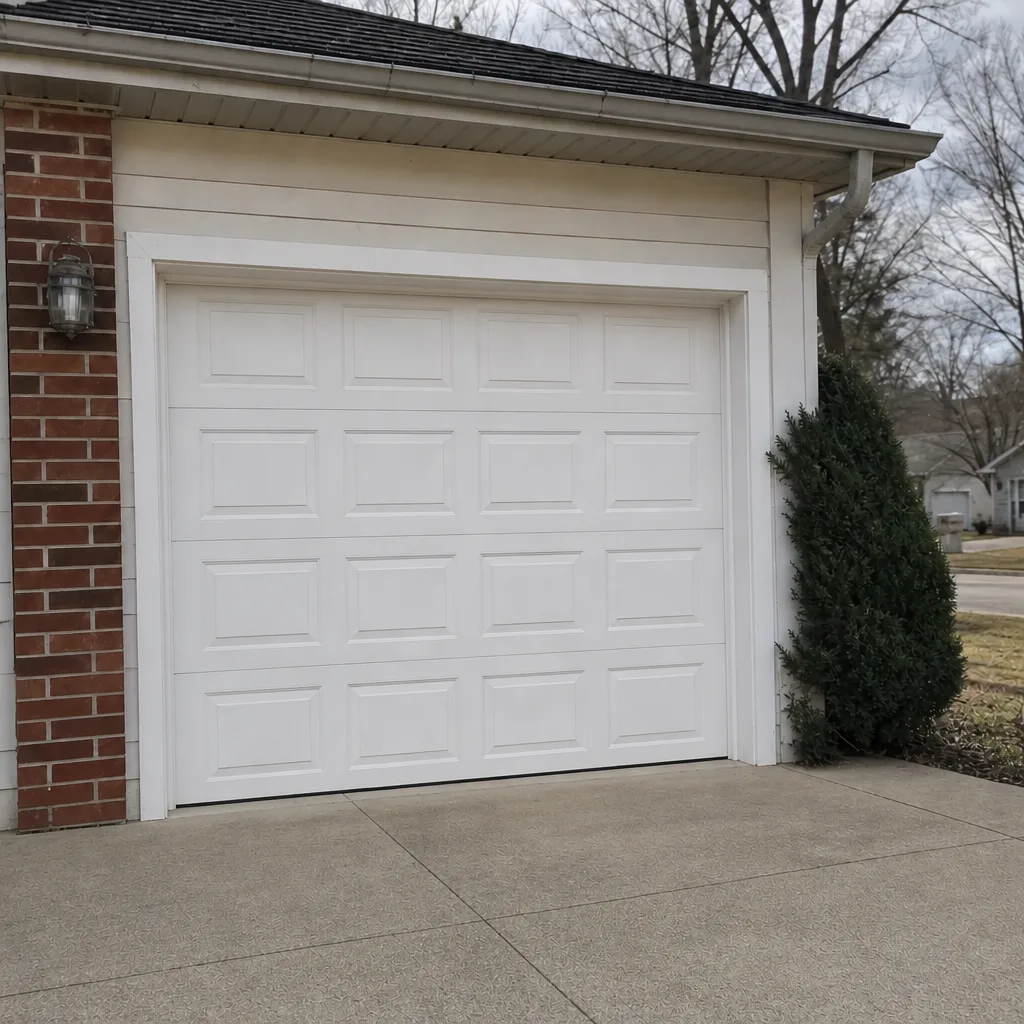 After
When to Call a Professional
Call a professional today if a spring has snapped, a cable is hanging or frayed, the door is off its tracks, or the door looks visibly crooked and feels heavy. These are the warning signs that involve parts under extreme tension or a door that can fall. In those cases, keep everyone clear of the door until a technician has looked at it. Call this week for an opener that hums without moving, a persistent grinding sound, a sensor that flickers, or a door that shudders in one spot of its travel. Those are scheduled repairs that save real money if handled before the next part fails.
The other question is fit. A general handyman can change a light bulb on the opener but shouldn’t be winding a torsion spring or resetting a bent track. Garage doors are all we do, which means we do them better, and we work on virtually every major brand, including yours. We answer 24/7, and we run fast dispatch from 7am to 7pm, Sunday through Friday. Garage Door Repair Lynnhaven offers free estimates in Lynnhaven. Call (877) 792-5898.
Frequently Asked Questions
Look at the door itself before the opener. With the door down, pull the release cord and try to lift it by hand. If it lifts easily, the door is fine and the opener is the problem. If it feels heavy or stuck, the door is the problem, and a spring, cable, or track is the likely cause. That one test splits the diagnosis roughly in half before you pick up the phone.
Check the sensor indicator light first. If the LED on the sensor housing is solid, the sensor is aligned and the reversal is coming from somewhere else, usually the door’s down travel or the force limit. A blinking LED points to alignment, a blocked lens, or a wiring issue. A technician can confirm which side the fault is on in a few minutes once you describe what the light is doing.
Rust on hinges and rollers is a warning sign to log, not panic over. What matters is where the rust has reached. Surface rust on a hinge is cosmetic. Rust bloom on the cable at the drum, or staining at the spring anchor plate, means the moisture has been there long enough to reach the working parts, which is when a scheduled repair becomes the right call.
We don’t recommend it. A new spring pushing against a worn one transfers the load to the weaker part, and the failure often moves to the older spring within a short window. On a matched pair, both springs are replaced together, and the price for a pair is about twice the single-spring price. Ask whether your door has one spring or two before you accept a quote.
We answer 24/7, and we run fast dispatch from 7am to 7pm, Sunday through Friday. For a broken spring, a cable off its drum, or a door off its tracks, call as soon as you notice the problem. A call outside dispatch hours is booked into the next opening, Sunday through Friday, 7am to 7pm. For a scheduled repair, we’ll set an arrival window that works for you.
The written estimate sets the price. Your quote is agreed before any work starts, so the invoice matches what you were told. If a technician finds an additional problem on arrival, they’ll explain it, quote it separately, and you decide whether to include it. Nothing on the original estimate changes without your approval. Call (877) 792-5898 for an exact quote. Estimates are free.
The Bottom Line
A warning sign is a mechanical message. The symptom is rarely the whole story. A reversing door can be a sensor, a track, or a motor. A loud bang is almost always a spring. A shuddering door is usually a roller. Your job as a homeowner is not to diagnose, it’s to notice the pattern, sort it by urgency, and call at the right tier. Springs, cables, and anything under tension get a call today. Openers, tracks, and sensors that misbehave intermittently get a call this week. Rust, vibration, and small dings go in a log with a 30-day check. That’s the whole system, and it works whether the door is a Craftsman or a Raynor.
From a single broken cable to a full door replacement, one call covers it. Call (877) 792-5898. We answer 24/7. Fast dispatch from 7am to 7pm, Sunday through Friday.
Written by the team at Garage Door Repair Lynnhaven.